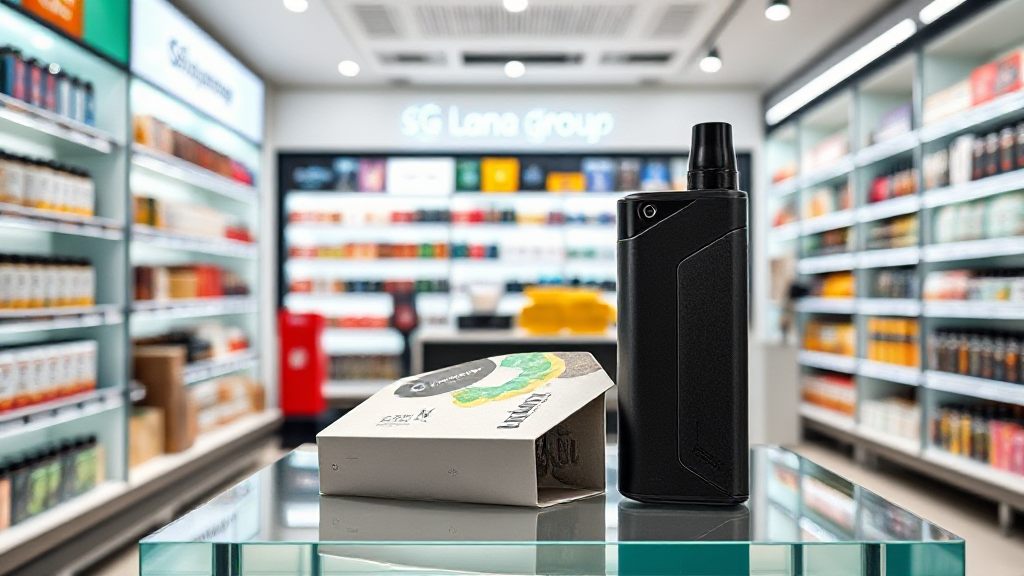
From Cart to Doorstep: The Real Journey of a Same-Day Vape Parcel in Singapore
Most buyers only ever see two moments: the checkout screen and the knock on the door. Everything in between — the stock check, the pick, the seal, the dispatch run, the handover — happens out of sight. For anyone comparing sellers, though, that invisible middle is where the real differences live. Understanding how a parcel physically moves through a Singapore courier network tells you far more about a seller than any product photo. This operational walkthrough follows a single order from confirmation to doorstep, using the local-stock model behind Lana vape same day delivery as the reference example at each stage.
The premise is simple. A same-day promise is only credible if the item is already sitting on a shelf within the delivery zone. Everything that follows — the speed, the discretion, the condition of the parcel — flows from that one fact. So the journey starts not at the courier, but at the moment stock and order are matched.
Stage 1: Order Confirmation and the Stock Match
When a checkout completes, the first meaningful event is not packing. It is verification. An operations team checks that the exact device or pod flavour in the order exists in physical inventory, not just on a website listing. This is the difference between a catalogue seller and a local-stock seller. A catalogue model accepts the order and then sources the item, which adds hours or days. A local-stock model confirms against shelves that are already in the country.
This stage is also where order details get reviewed for accuracy: model, quantity, flavour variant, and delivery address. Address quality matters more than most buyers realise. A missing unit number or an ambiguous building name can stall a parcel at the final step, long after the courier has done everything right. Clean order data at confirmation is what allows the rest of the timeline to stay tight.
For buyers, the practical takeaway is straightforward: a seller who can confirm stock instantly is a seller who is not waiting on a supplier. That is the foundation of any honest Singapore vape delivery promise.
Stage 2: Picking From Local Stock
Once confirmed, the order moves to picking. In a well-run local operation, this is a short walk, not a logistics project. The picker locates the specific SKU — say a disposable device or a pod pack — and pulls it from inventory. Because the stock is domestic, there is no customs queue, no cross-border handoff, and no multi-day transit leg before the parcel even reaches a local hub.
Good picking involves more than grabbing an item. It means verifying the batch, checking that packaging is intact, and confirming the device has not been opened or tampered with. Authenticity checks belong here, at the shelf, not at the doorstep. If a seller offers genuine branded devices, the pick stage is where that claim is either honoured or quietly broken.
This is also the stage where inventory accuracy pays off. Sellers who track stock properly rarely cancel orders after confirmation. Sellers who do not will take an order, then discover the shelf is empty, and the customer learns about the problem hours later. The pick stage is the first real test of whether a same-day claim is operational or aspirational.
Stage 3: Packing and Discreet Sealing
Packing is where discretion is engineered. For adult buyers in Singapore, a parcel that announces its contents on the outside is a problem. A properly packed order uses plain outer packaging, no branded tape, and no external labelling that reveals what is inside. The seal should be clean and tamper-evident, so the recipient can tell at a glance whether the parcel arrived intact.
Internally, packing also protects the product. Devices and pods can be damaged by compression or movement, so a sensible pack uses enough cushioning to keep items stable without bulking the parcel unnecessarily. A bulky parcel is slower to handle and more conspicuous, which works against both speed and discretion.
This stage is a useful quality signal. If a seller treats packing as an afterthought, the same carelessness usually shows up elsewhere — in stock accuracy, in dispatch timing, in how they handle a problem. Discreet, well-sealed packaging is a small thing that reflects a larger operational discipline.
For buyers who value privacy as much as speed, this is the point where lana vape sg style local operations tend to separate themselves from drop-shipping sellers who never touch the parcel at all. Singapore lana vape
Summary: A same-day parcel is not fast because a courier drives quickly. It is fast because stock is local, picking is immediate, packing is clean, and dispatch is scheduled against real cut-off times. Remove any one of those and the promise collapses.
Stage 4: Dispatch and Courier Handover
Dispatch is the handoff point where the parcel leaves the seller’s control and enters the courier network. This is where timing becomes measurable. A seller with a genuine same-day model works to a cut-off — orders confirmed before a certain hour go out on the same dispatch run. Orders after the cut-off roll to the next cycle. Clear cut-offs are a sign of an organised operation, because they mean the seller knows exactly how long each preceding stage takes.
The courier handover itself is a chain-of-custody event. The parcel is scanned, assigned to a rider or route, and tracked from that moment. In a dense city like Singapore, routes are short but traffic-sensitive, so dispatch planning matters. A parcel dispatched at the right time in the right zone can move across the island in a fraction of the time a poorly timed one takes.
This is also where tracking quality shows. A seller who provides a real tracking reference and honest status updates is a seller who has integrated properly with their courier. Vague updates — or none at all — usually mean the parcel is moving through a manual, improvised process.
For anyone weighing options, the dispatch stage is the clearest window into whether a Vape delivery sg service is built on repeatable logistics or on luck.
Stage 5: In Transit Through the Local Network
Once in transit, the parcel follows a route shaped by geography and volume. In Singapore, this typically means a short hop from the seller’s dispatch point to a local sorting or staging area, then out to the delivery zone. Because distances are short, the dominant variables are timing and density, not distance. A route with many stops takes longer than a direct run, so zone planning affects arrival windows.
Transit is also where most buyer anxiety lives, because it is the least visible stage. The parcel is out of the seller’s hands and not yet at the door. This is precisely why local stock matters: a domestic parcel has no customs stage, no international leg, and no border delay. It moves within one regulatory and logistical environment from start to finish.
Buyers should expect realistic transit windows rather than instant magic. Same-day means same calendar day, not same hour. A seller who sets honest expectations about transit time is more trustworthy than one who promises impossible speed and then quietly misses it.
Stage 6: Handover and What Happens After
The final stage is the doorstep handover. The rider arrives, the recipient confirms the parcel, and the chain of custody closes. Good operations build in a verification step here — confirming the recipient, checking the parcel is sealed, and noting any issue immediately rather than after the rider has left.
What happens after handover is just as telling. A serious seller keeps a record of the order, the dispatch time, and the delivery confirmation. If something goes wrong — a damaged item, a wrong variant — that record is what makes a resolution fast instead of frustrating. Sellers who treat the sale as finished at the doorstep have no such record, and problems become arguments.
This is where the whole timeline pays off for the buyer. A parcel that was picked from real local stock, packed discreetly, dispatched against a real cut-off, and tracked through a local network arrives in a condition and timeframe the seller can actually stand behind. That reliability is the product, as much as the device inside the box.
Seen end to end, the journey explains why local inventory is the quiet engine behind any credible same-day offer. Buyers who understand the six stages — confirmation, picking, packing, dispatch, transit, handover — can ask sharper questions and read a seller’s claims more accurately. A service like Sg vape shop delivery that can describe its own process plainly, stage by stage, is usually one that has actually built it.
For adult buyers in Singapore, the practical lesson is simple: judge the operation, not just the listing. Speed is a symptom of good logistics, discretion is a symptom of good packing, and reliability is a symptom of good records. When all three line up, the knock on the door is the least interesting part of the story — because everything that mattered already happened before the parcel ever left the shelf.

