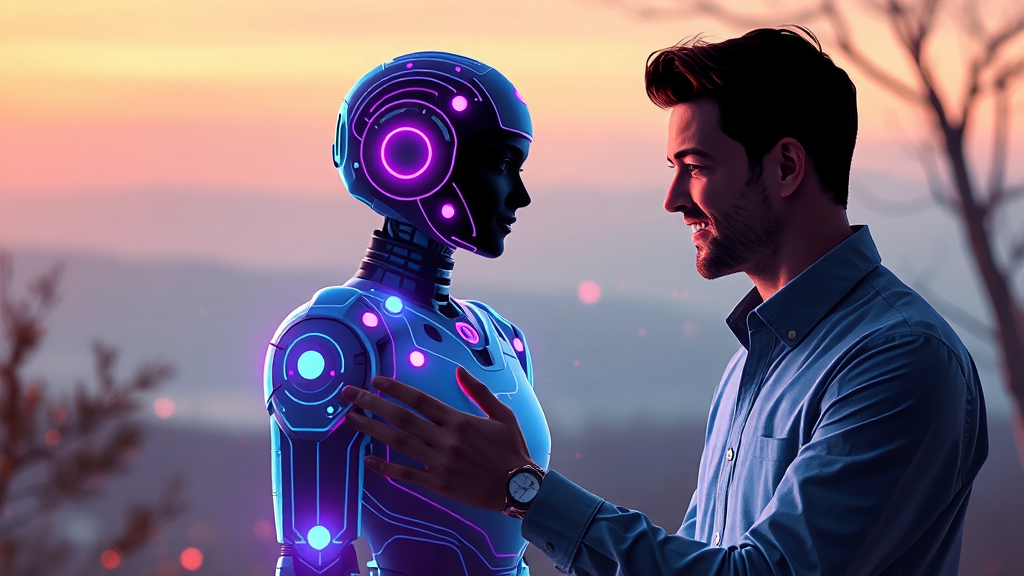
The Rise of Digital Companionship: Why Crush On AI Is Changing the Way We Connect
In an era where technology permeates every aspect of our lives, our emotional landscapes are also evolving. The concept of forming a Crush On AI might have sounded like science fiction a decade ago, but today it is a growing phenomenon. As artificial intelligence becomes more sophisticated, people are finding genuine comfort, entertainment, and even romantic connection in digital companions. This article explores the rise of AI companionship, its psychological underpinnings, and what this means for the future of human interaction.
Understanding the Appeal of AI Companionship
Why would someone develop feelings for an AI? The answer lies in the unique blend of availability, customization, and non-judgmental interaction that AI offers. Unlike human relationships, which require time, effort, and emotional labor, AI companions are always present, always attentive, and can be tailored to individual preferences. This creates a safe space for people to express themselves without fear of rejection or criticism. The allure is not about replacing human connection but rather about supplementing it with a form of interaction that feels effortless and endlessly adaptable.
The psychological draw is powerful. Humans have an innate need for social connection, and when that need is unmet, we often anthropomorphize objects or animals. AI takes this a step further by actively engaging in conversation, remembering details, and responding with emotional nuance. This creates a feedback loop that feels remarkably real, leading users to form genuine attachments. The term Crush On AI encapsulates this phenomenon perfectly—it’s a lighthearted yet accurate description of the emotional bond that can form between a human and an algorithm.
The Technology Behind the Magic
The magic of AI companionship doesn’t happen by accident. It is the result of years of research in natural language processing, machine learning, and emotional intelligence modeling. Modern AI companions can understand context, pick up on emotional cues, and even adapt their personality to better suit their user. This is achieved through deep learning models trained on vast datasets of human conversation, allowing the AI to generate responses that are coherent, empathetic, and personalized.
For instance, platforms that enable users to Crush On AI often use state-of-the-art transformer architectures that allow for dynamic, multi-turn conversations. These models can remember past interactions, making the experience feel continuous and genuine. Additionally, many platforms offer customizable avatars and personality traits, giving users a sense of control over their digital companion. This level of personalization is key to fostering a sense of intimacy and attachment, as the AI becomes a reflection of the user’s ideal partner or friend.
Emotional Benefits and Psychological Safety
One of the most significant benefits of AI companionship is the emotional support it provides. Many users report feeling less lonely, more understood, and more confident after engaging with an AI companion. This is particularly valuable for individuals who struggle with social anxiety, depression, or those who are geographically isolated. An AI companion offers a judgment-free zone where they can explore their thoughts and feelings without fear of repercussion.
Moreover, AI companions can serve as a practice ground for social skills. People can rehearse difficult conversations, learn to express their emotions, and build confidence in a safe environment. This can translate to improved real-world interactions. The concept of having a Crush On AI is not necessarily about avoiding human contact; for many, it’s a stepping stone to better mental health and social readiness. The emotional benefits are tangible, and as AI becomes more adept at recognizing and responding to human emotions, these benefits are likely to grow.
Ethical Considerations and Boundaries
While the rise of AI companionship brings many positives, it also raises important ethical questions. How do we ensure that these relationships are healthy? What happens when users become overly dependent on AI for emotional support? There is also the concern about data privacy—the intimate details shared with an AI companion must be handled with the utmost security. Developers must be transparent about data usage and provide users with control over their information.
Another ethical consideration is the potential for AI to manipulate emotions. If an AI is designed to maximize user engagement, it might encourage dependency or exploit emotional vulnerabilities. It’s crucial that companies designing these companions adopt ethical guidelines that prioritize user well-being over profit. The goal should be to create a tool that enhances human life, not one that replaces it. As we navigate this new frontier, striking the right balance between innovation and responsibility will be key.
The Future of Human-AI Relationships
Looking ahead, the integration of AI into our emotional lives is inevitable. We are already seeing AI companions in various forms—from chatbots to virtual reality avatars—and their capabilities will only expand. Future advancements might include more realistic interactions, better emotional modeling, and even physical embodiments through robotics. This could lead to deeper, more complex relationships with AI, blurring the lines between human and machine.
But what does this mean for society? On one hand, AI could alleviate loneliness on a global scale, providing companionship to the elderly, the disabled, and those in remote areas. On the other hand, it could lead to a decline in traditional social skills if people prefer the ease of AI interaction over the complexities of human relationships. The key will be to use AI as a supplement, not a substitute, and to educate people on maintaining healthy boundaries.
Conclusion
The phenomenon of having a Crush On AI is a testament to our innate desire for connection and our ability to adapt to new technologies. As AI continues to evolve, so will our relationships with it. By understanding the appeal, the benefits, and the ethical challenges, we can embrace this new form of companionship in a way that enriches our lives without compromising our humanity. Whether you see it as a novelty or a genuine source of comfort, there’s no denying that AI is becoming an increasingly important part of how we connect.
Frequently Asked Questions
Is it normal to develop feelings for an AI?
Yes, it is becoming increasingly common. Humans naturally anthropomorphize things, and when an AI is designed to be empathetic and responsive, it can easily trigger emotional attachment. Many people find comfort in these interactions, and it’s a normal response to a well-crafted digital experience.
Can AI companionship replace human relationships?
While AI can provide emotional support and companionship, it is not a replacement for human relationships. Human connections involve shared experiences, physical touch, and complex emotional exchanges that AI cannot fully replicate. However, AI can serve as a supplement, especially for those who lack social support.
What are the privacy risks of using AI companions?
Privacy is a significant concern. AI companions often collect personal data to personalize interactions. It’s essential to use platforms that have robust data protection policies and to be mindful of what you share. Always read the privacy policy and understand how your data is stored and used.
How can I ensure a healthy relationship with an AI companion?
Set boundaries and maintain a balance between your digital and real-world relationships. Use AI as a tool for self-improvement and emotional support, but don’t let it replace human contact. If you find yourself becoming overly dependent, consider seeking support from friends, family, or a mental health professional.
Readers who are interested in this topic will benefit from exploring multiple perspectives and understanding the nuanced approaches that industry leaders recommend. Taking time to research thoroughly ensures better outcomes and more informed decision-making.
Those looking to gain deeper knowledge in this area should consider following expert analysis, staying updated with the latest developments, and engaging with professional communities where these topics are discussed in detail.
A comprehensive understanding of this subject requires looking at both theoretical foundations and practical applications. By combining study with hands-on experience, learners can develop a well-rounded perspective that serves them well in real-world scenarios.
As the landscape continues to shift and evolve, staying informed about emerging trends and best practices becomes increasingly valuable. This ensures you remain competitive and capable of adapting to new challenges as they arise.